
Literature Review on AI Aging Biomarkers
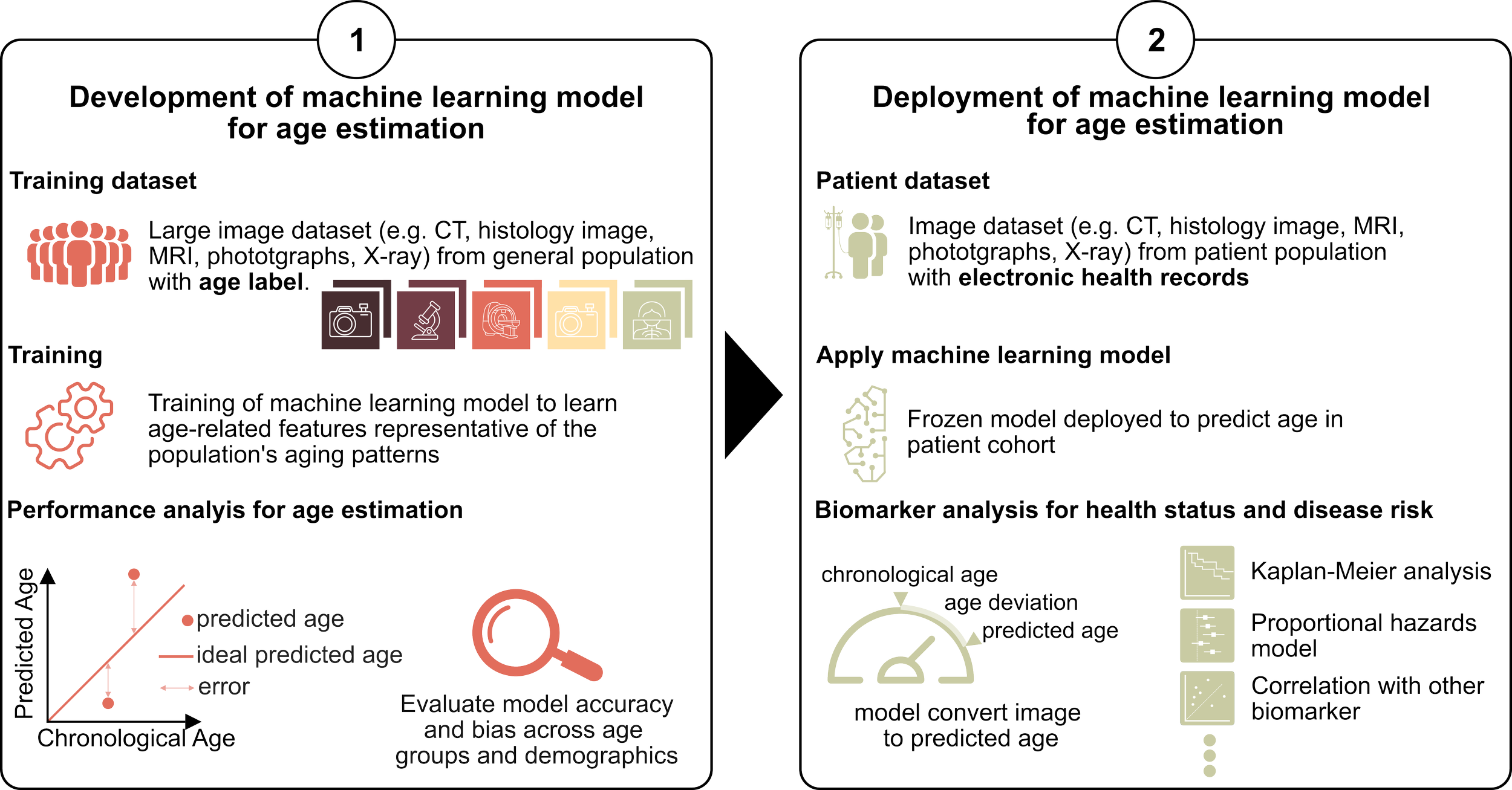
A new Review in The Lancet Healthy Longevity examines how artificial intelligence can estimate biological age from different types of imaging, including brain MRI, chest imaging, abdominal imaging, bone imaging, retinal images, and face photographs. The Review highlights how the difference between AI predicted age and chronological age may serve as a biomarker of health status, disease risk, and prognosis. It also discusses key challenges for clinical translation, including model bias, validation across diverse populations, interpretability, and ethical implementation.
Abstract
Chronological age, although commonly used in clinical practice, fails to capture individual variations in rates of ageing and physiological decline. Recent advances in artificial intelligence (AI) have transformed the estimation of biological age using various imaging techniques. This Review consolidates AI developments in age prediction across brain, chest, abdominal, bone, and facial imaging using diverse methods, including MRI, CT, x-ray, and photographs. The difference between predicted and chronological age—often referred to as age deviation—is a promising biomarker for assessing health status and predicting disease risk. In this Review, we highlight consistent associations between age deviation and various health outcomes, including mortality risk, cognitive decline, and cardiovascular prognosis. We also discuss the technical challenges in developing unbiased models and ethical considerations for clinical application. This Review highlights the potential of AI-based age estimation in personalised medicine as it offers a non-invasive, interpretable biomarker that could transform health risk assessment and guide preventive interventions.
Cite this article
Haugg, F., Lee, G., He, J. et al. Imaging biomarkers of ageing: a review of artificial intelligence-based approaches for age estimation. The Lancet Healthy Longevity 6, 100728 (2025). https://doi.org/10.1016/j.lanhl.2025.100728